Preventive Maintenance
Scheduled PM services, oil and filter changes, fluid checks and DOT pre-trip inspections, on your yard or ours.
Learn moreMobile and in shop
Brakes are the single most common out of service violation in roadside inspections. We measure, record and repair to spec so your truck passes on the numbers, not on the inspector’s mood.
Brake work on a commercial vehicle is a measurement job. Pushrod stroke, lining thickness, drum diameter and rotor thickness all have published limits, and an inspector on the side of I-95 will check them with a ruler. We do the same thing before you get there. Every brake job we complete comes back to you with the measurements written down, so you know exactly how much life is left on each axle and can plan the next service instead of discovering it during a Level 1 inspection.
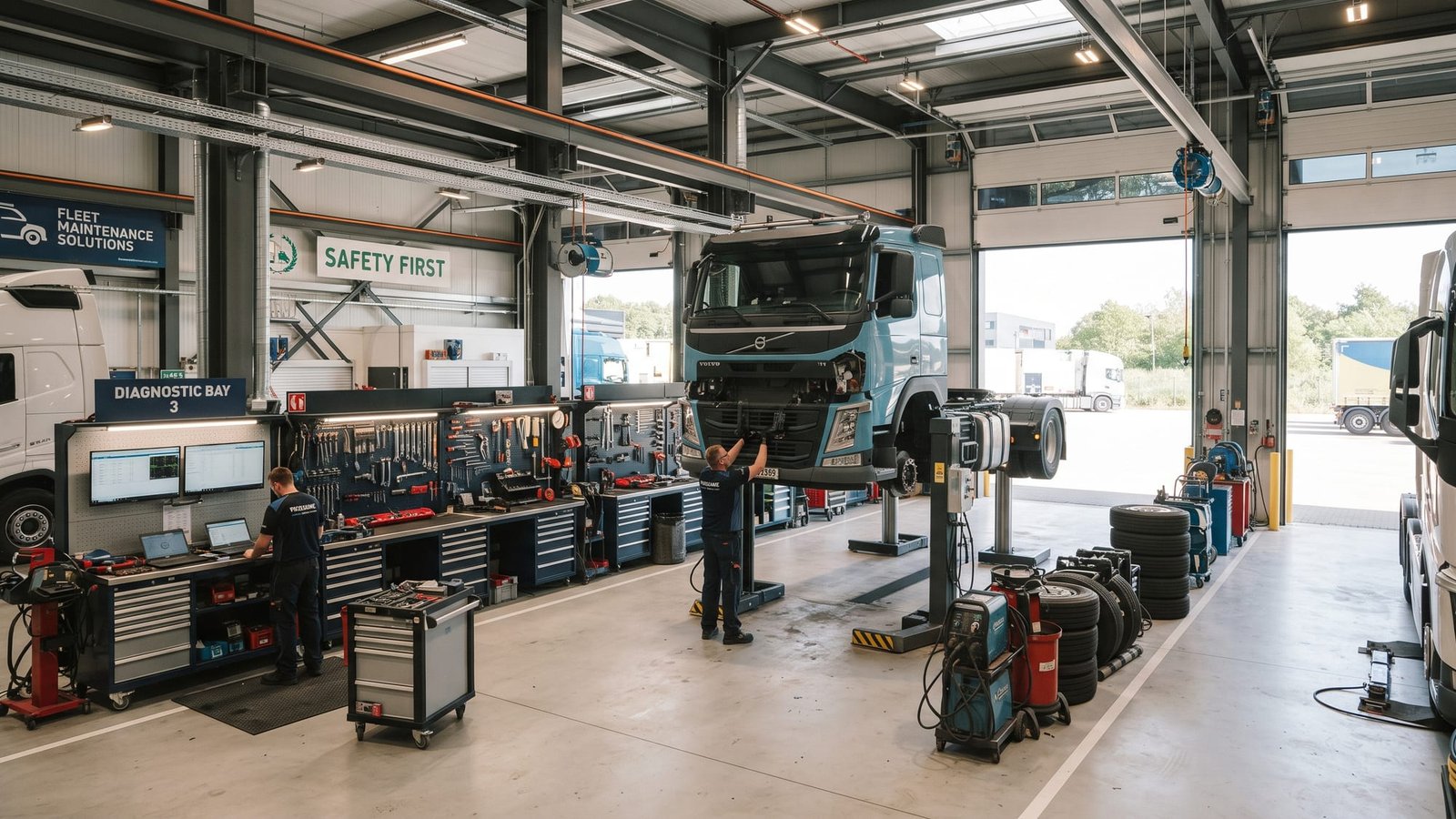
We carry brake components for the common tractor and trailer axle configurations so most brake jobs are completed the same day rather than waiting on parts. Our mobile units handle chamber replacement, air leak repairs and slack adjuster work at your yard. Full relines, drum work and ABS diagnostics come into the shop where the wheel ends can be pulled properly and the results measured.
Mobile and in shop
Covering Baltimore City and 29 surrounding communities, out to roughly 30 miles from the shop on Ponca Street.
See the areas we coverThe full scope of the work, so there is no ambiguity about what is and is not included when you approve a job.
If you recognise any of these, it is worth a call before it becomes a roadside call.
Air pressure drops faster than it should, or the compressor cycles constantly
Brakes pull to one side under moderate braking
Squeal, grinding or a heavy rumble when slowing
ABS lamp is on at the dash or on the trailer
Long stopping distances, or the truck feels like it needs a bigger push than usual
Air leak audible at a chamber, valve or line when the system is charged
Brake drums running much hotter on one wheel end than the others
Parking brake will not release, or releases slowly
The sequence matters as much as the repair. Working through it in this order is what stops you paying for parts the fault never pointed at.
Pushrod stroke, lining and drum or rotor measurements at all wheel ends, plus a full air system test. This tells us what is legal, what is marginal and what is out of service.
We charge the system and leak down test it, checking chambers, valves, gladhands and lines. Chasing air loss is usually cheaper than replacing the compressor that has been working overtime to hide it.
You get the numbers by wheel end and a quote broken down by axle, so you can approve the axles that need doing now and schedule the rest.
Linings, drums, rotors and hardware replaced as a set per axle, with fasteners torqued to spec and slack adjusters set correctly.
Post repair stroke measurement, air system retest, ABS scan and a road test. You leave with a written record you can show an inspector.
Faults rarely sit in one system. These are the ones that most often come up alongside this work.
Scheduled PM services, oil and filter changes, fluid checks and DOT pre-trip inspections, on your yard or ours.
Learn moreStructural repairs, liftgates, doors, lighting and full trailer electrical overhauls on dry vans, reefers and flatbeds.
Learn moreSteering gear, tie rods, air bags, shocks and alignment work that stops irregular tire wear before it costs you casings.
Learn moreSigns Your Air Brakes Need Service Before Your Next DOT Inspection
Brake violations lead every out of service category. Almost all of them are visible or measurable days before an inspector finds them.
Read the articleBrakes and Safety
Brake violations lead every out of service category. Almost all of them are visible or measurable days before an inspector finds them.
4 min read
Send the unit details and the symptom and dispatch will come back to you. If the truck is off the road right now, call instead.
A form is fine for scheduling. For a truck that is stopped, a call gets a unit moving while you are still describing the problem.
(443) 630-6669Drawn from the questions we get asked most about this specific service.
A brake inspection belongs in every preventive maintenance interval, which for most highway tractors means every 90 days or roughly 25,000 miles. Stop and go work around the Port of Baltimore and the Beltway wears linings faster, so those trucks often need a shorter interval.
The limit depends on chamber type and size, and a vehicle is placed out of service when it has 20 percent or more defective brakes. Rather than working from memory, we measure every wheel end and give you the numbers against the published limit for your specific chambers.
Chamber replacement, air leak repairs, slack adjusters and lines are all routine mobile jobs. Full relines and drum work are better in the shop where we can pull hubs cleanly and turn drums if needed.
Yes. Replacing one side of an axle creates a braking imbalance and a pull, so linings, hardware and drums or rotors are done as a set per axle. We will always tell you which axles genuinely need it.
An illuminated ABS lamp is a violation on a roadside inspection even when the service brakes work. It is usually a wheel speed sensor or a tone ring, both of which are quick fixes. Get it scanned before your next inspection rather than after.
Yes, and we check the balance between them. A tractor doing all the braking for a trailer that is barely helping is a common cause of premature tractor lining wear.
Every brake job comes with a written measurement report by wheel end. Fleet accounts get these filed against the unit number so the maintenance history is complete when an auditor asks.