Emergency Roadside Assistance
Mobile assistance across the Baltimore metro area for tires, fuel, jump starts, air faults and breakdowns.
Learn moreMobile roadside, six days a week
A blown drive tire on the Beltway is a two hour problem or a six hour problem depending on who you call. Our service trucks carry common sizes so we usually arrive with the tire you need already on board.
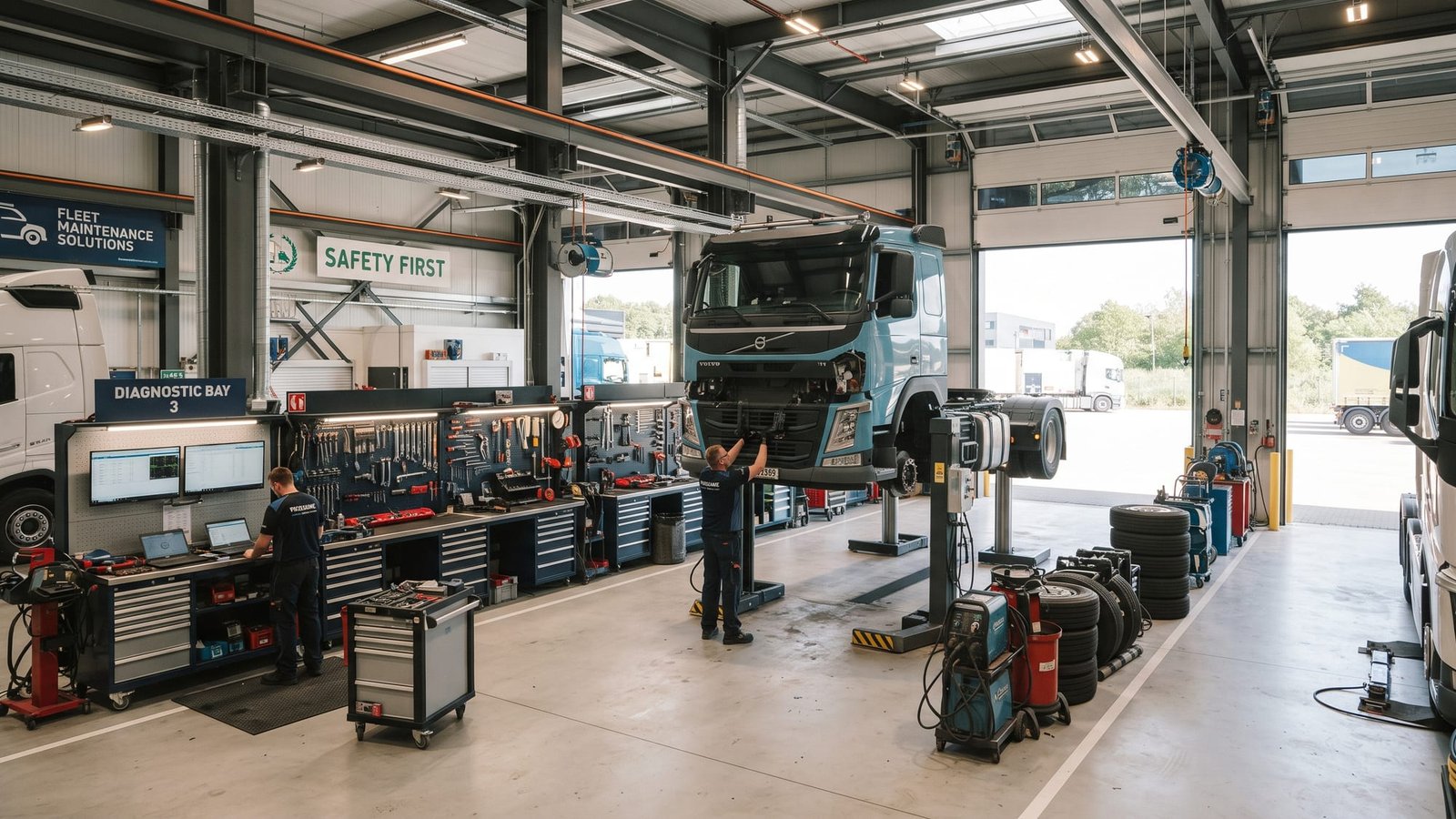
Tire calls are the highest volume roadside work we do, and the thing that decides how long you sit is whether the responding truck actually has your size. We stock the common tractor and trailer sizes on our mobile units, run air powered tooling capable of commercial torque values, and carry both new and quality casings so you can choose based on how long the truck needs to stay on the road. Every wheel we fit is torqued to specification and rechecked, because a wheel off is a far worse day than a flat.
Mobile units carry commercial tire changing equipment, air powered impact tooling, calibrated torque wrenches and an inventory of the common sizes in steer, drive and trailer patterns. In the shop we mount and balance on a heavy duty machine, which is what makes the difference on steer tire vibration complaints that roadside mounting alone will not fix.
Mobile roadside, six days a week
Covering Baltimore City and 29 surrounding communities, out to roughly 30 miles from the shop on Ponca Street.
See the areas we coverThe full scope of the work, so there is no ambiguity about what is and is not included when you approve a job.
If you recognise any of these, it is worth a call before it becomes a roadside call.
Blowout or flat on the road, loaded or empty
Slow leak that needs airing up every morning
Uneven or irregular tread wear across an axle
Vibration through the steering wheel at highway speed
Sidewall damage, bulges, exposed cords or curb cuts
TPMS warning showing low pressure on a specific position
Tread depth approaching the legal minimum on steers or drives
A dual pair running at visibly different pressures or diameters
The sequence matters as much as the repair. Working through it in this order is what stops you paying for parts the fault never pointed at.
We ask for your exact position, the tire size, the wheel position and whether you are loaded. That is what determines which truck we send and what goes on it.
Cones, amber lighting and correct positioning before any work starts. On a live shoulder like I-695 the setup matters as much as the repair.
If the injury is repairable within the tread area and the casing is sound, we repair it, which is cheaper for you. If it is a sidewall or the casing is compromised, we replace it and tell you why.
Wheel fasteners torqued to spec with a calibrated wrench, and a quick pressure check across the remaining positions so you are not back on the phone in fifty miles.
We tell you the retorque interval for the wheel we fitted and note it on the invoice. If you are local, bring it in and we will do it at no charge.
Faults rarely sit in one system. These are the ones that most often come up alongside this work.
Mobile assistance across the Baltimore metro area for tires, fuel, jump starts, air faults and breakdowns.
Learn moreSteering gear, tie rods, air bags, shocks and alignment work that stops irregular tire wear before it costs you casings.
Learn moreScheduled PM services, oil and filter changes, fluid checks and DOT pre-trip inspections, on your yard or ours.
Learn moreHow to Handle a Blown Tire on I-95 Until Help Arrives
The first sixty seconds after a blowout decide most of what happens next. What to do with the truck, and where not to stand while you wait.
Read the articleTires and Wheels
The first sixty seconds after a blowout decide most of what happens next. What to do with the truck, and where not to stand while you wait.
4 min read
Send the unit details and the symptom and dispatch will come back to you. If the truck is off the road right now, call instead.
A form is fine for scheduling. For a truck that is stopped, a call gets a unit moving while you are still describing the problem.
(443) 630-6669Drawn from the questions we get asked most about this specific service.
The city, the port areas and the inner Beltway ring are the shortest runs from the shop, and the outer areas such as Annapolis, Columbia, Aberdeen and Laurel are the longest. Tell us the tire size off the sidewall and the wheel position when you call and the unit arrives with the right tire on it, which matters more than anything else.
We stock the common commercial sizes including 11R22.5, 295/75R22.5 and 285/75R24.5 in steer, drive and trailer patterns. Give dispatch the size on the sidewall when you call and we will confirm before rolling.
It can be repaired if the injury is within the repairable tread area, the casing is sound and it has not been run flat. Sidewall damage, run flat damage and injuries outside the crown area mean replacement. We will show you the injury and explain the call.
Yes, where they are appropriate. If a truck is close to trade or the position is a trailer tag, a quality casing can be the sensible choice. We will not put a marginal casing on a steer axle.
Clamping force settles after the first heat cycles and the joint relaxes slightly. Retorquing within the first 50 to 100 miles is what stops a wheel off event. We note the interval on your invoice.
Yes. Fleet accounts get tread depth and pressure recorded by unit and position, which turns tire spend from a surprise into a schedule. It usually pays for itself in fuel and casing life inside a year.